Description
Treadmill Vibration Isolation Pads
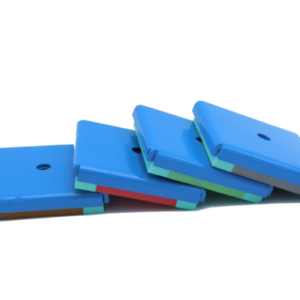
Treadmill vibration isolation pads are engineered to decouple high-impact machinery from building structures, directly mitigating the harmonic excitation and low-frequency motor hum associated with intense running.
Core Acoustic Performance
- Resonance Prevention: Heavy running typically triggers a primary structural excitation frequency of around 18Hz. If this aligns with your building’s structural frequency, the sound amplifies via resonance. These pads shift the system’s tuning to break that path.
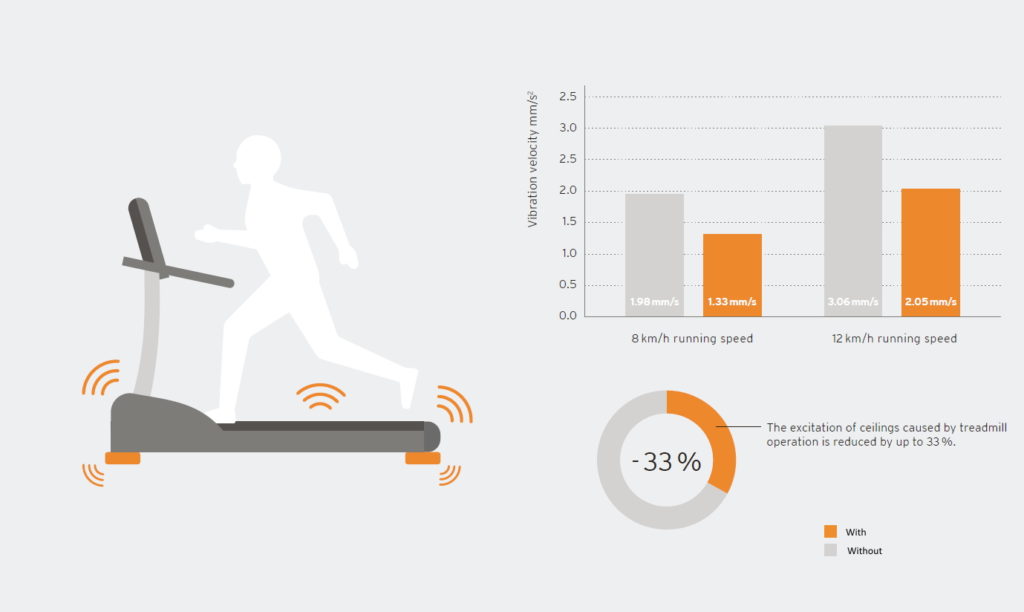
- Quantifiable Noise Suppression: Utilizing high-damping elastic PU materials, structural vibrations are reduced by up to 33%.
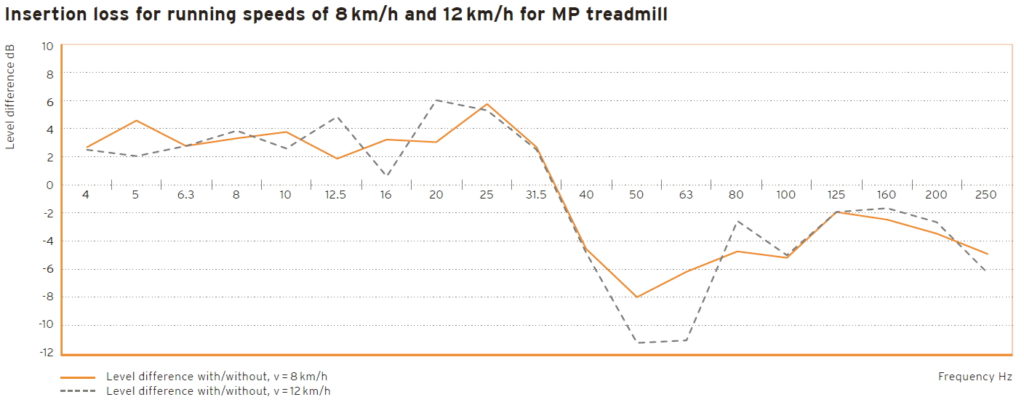
- Decibel Reduction: In laboratory testing, real-world noise levels dropped by up to 8dB at running speeds of 8km/h and up to 11dB at 12km/h—effectively cutting perceived airborne noise in half.
Selecting the Correct Version
The pads are manufactured in two specific stiffness profiles to ensure optimal material deflection under varying machine footprints:
- Standard T4: Calibrated for standard commercial and high-capacity residential treadmills.
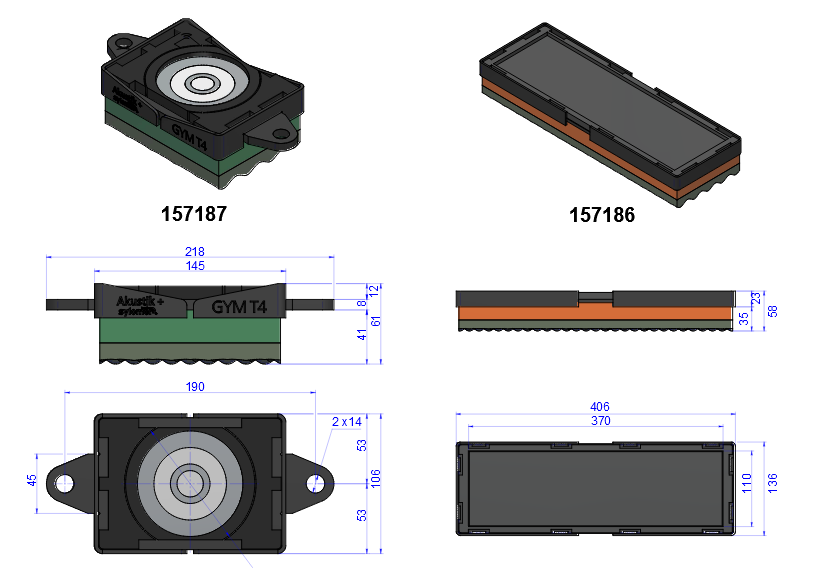
- Low Load T4: Configured with a softer, more compliant isolation core specifically for lightweight or compact walking pads and running decks.
- Check Machine Weight: Review the manufacturer’s literature to find the total weight of the treadmill, ideally establishing the front and rear weight distribution.
- Account for the Runner: Add the user’s weight to the machine’s weight.
- Calculate Total Tolerances: Under no circumstances should the combined weight of the machine and the runner exceed the total maximum weight capacity of the four pads.
Crucial Substrate Requirement
- Concrete Floors Only: These kits are specifically tuned and engineered for installation over solid concrete floors.
- Timber Floor Warning: Placing these isolators on flexible timber or joisted floor structures may fail to deliver the rated low-frequency dampening and can introduce secondary issues, such as sympathetic floor flexing.
Application & Installation Guide
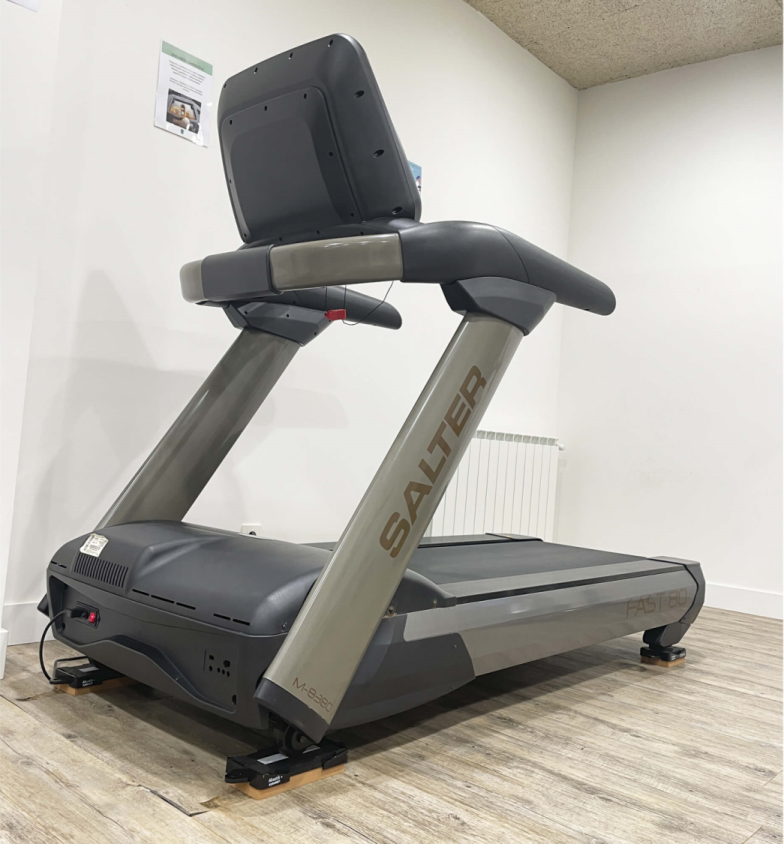
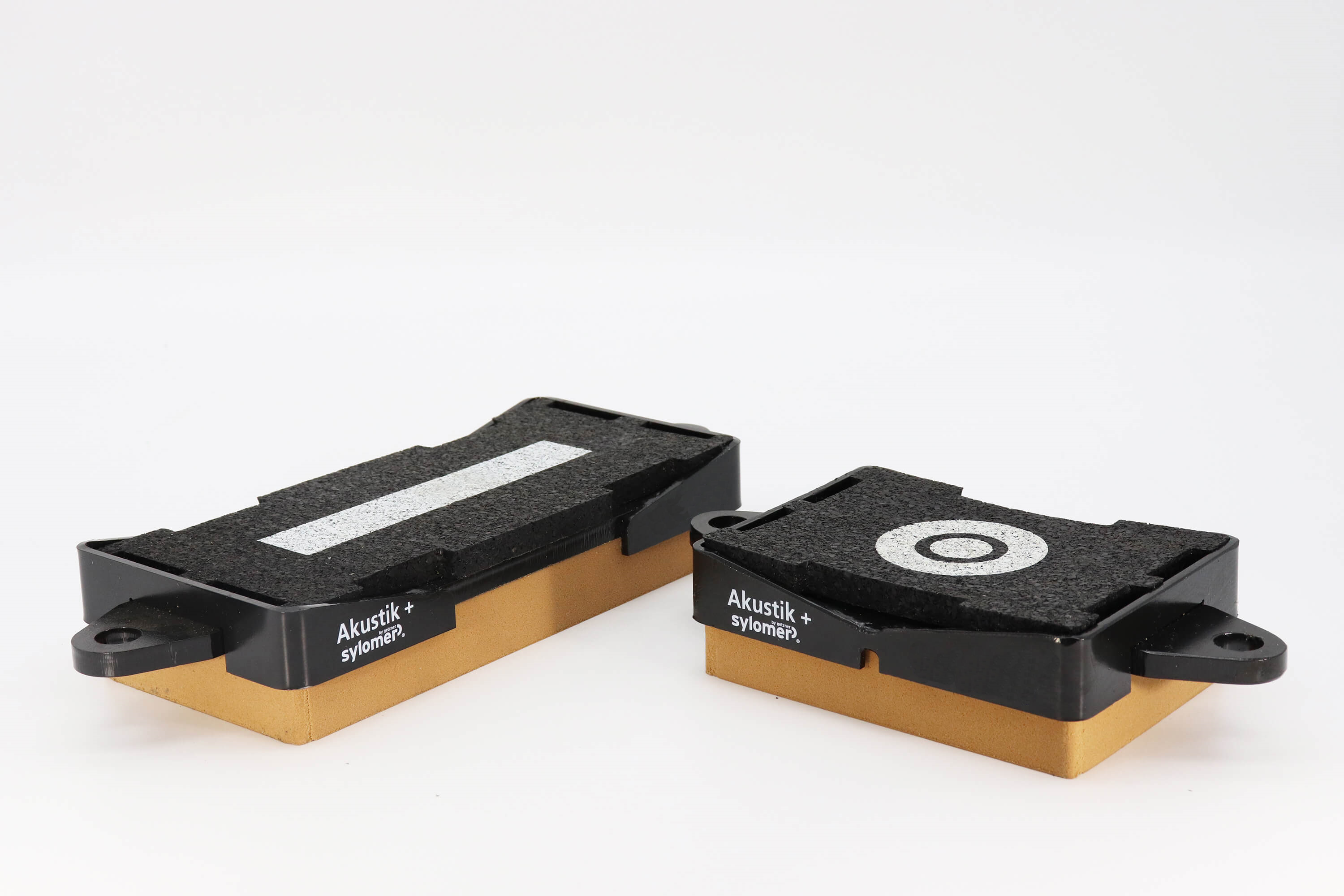
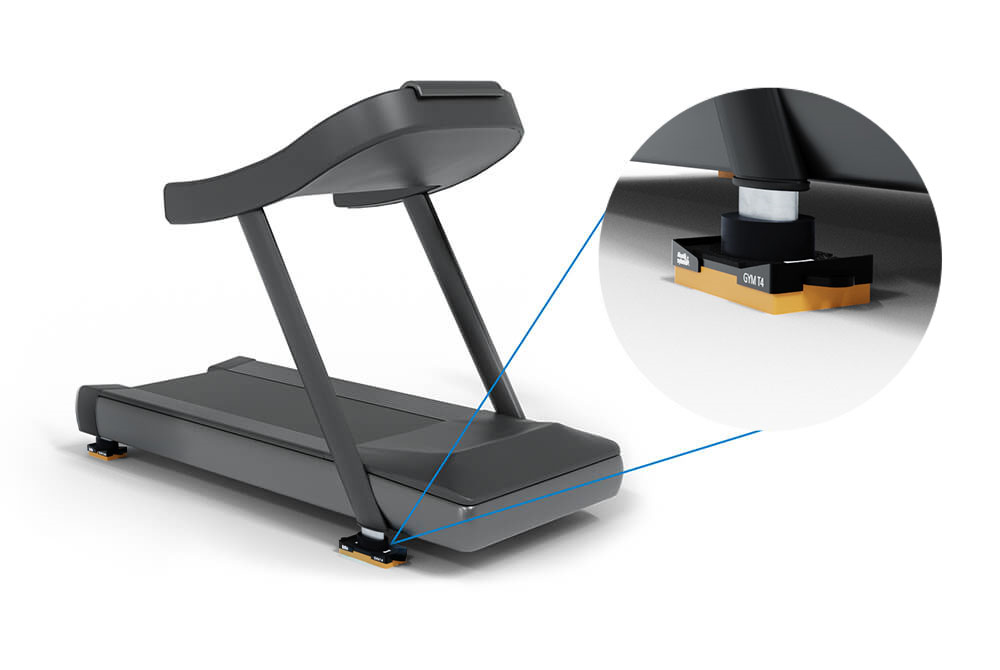
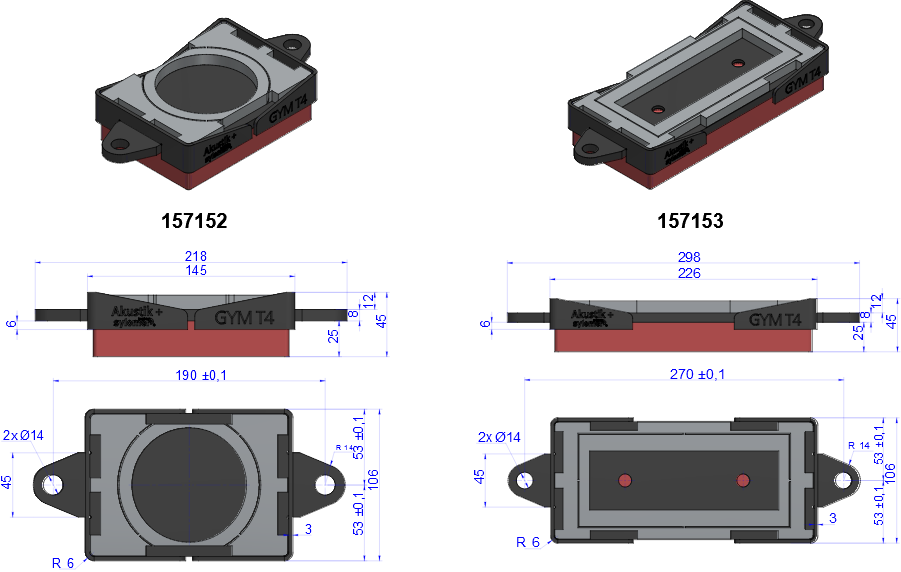
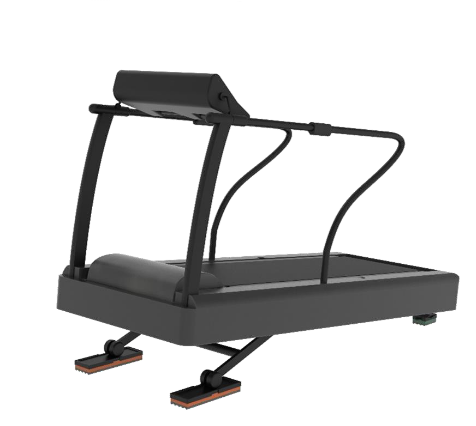
- Orient by Size: Each kit contains specialized sizes. Ensure the larger front pads sit beneath the heavy motor end, and the smaller rear pads support the back of the deck.
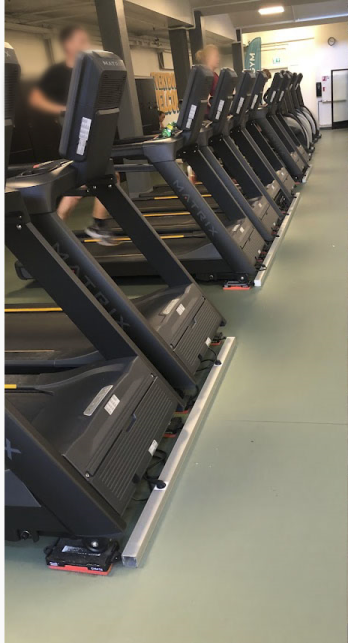
- Center the Footprint: Clean the floor substrate of all debris, safely hoist the machine following manufacturer guidelines, and lower it so each foot is completely centered on its respective mount.
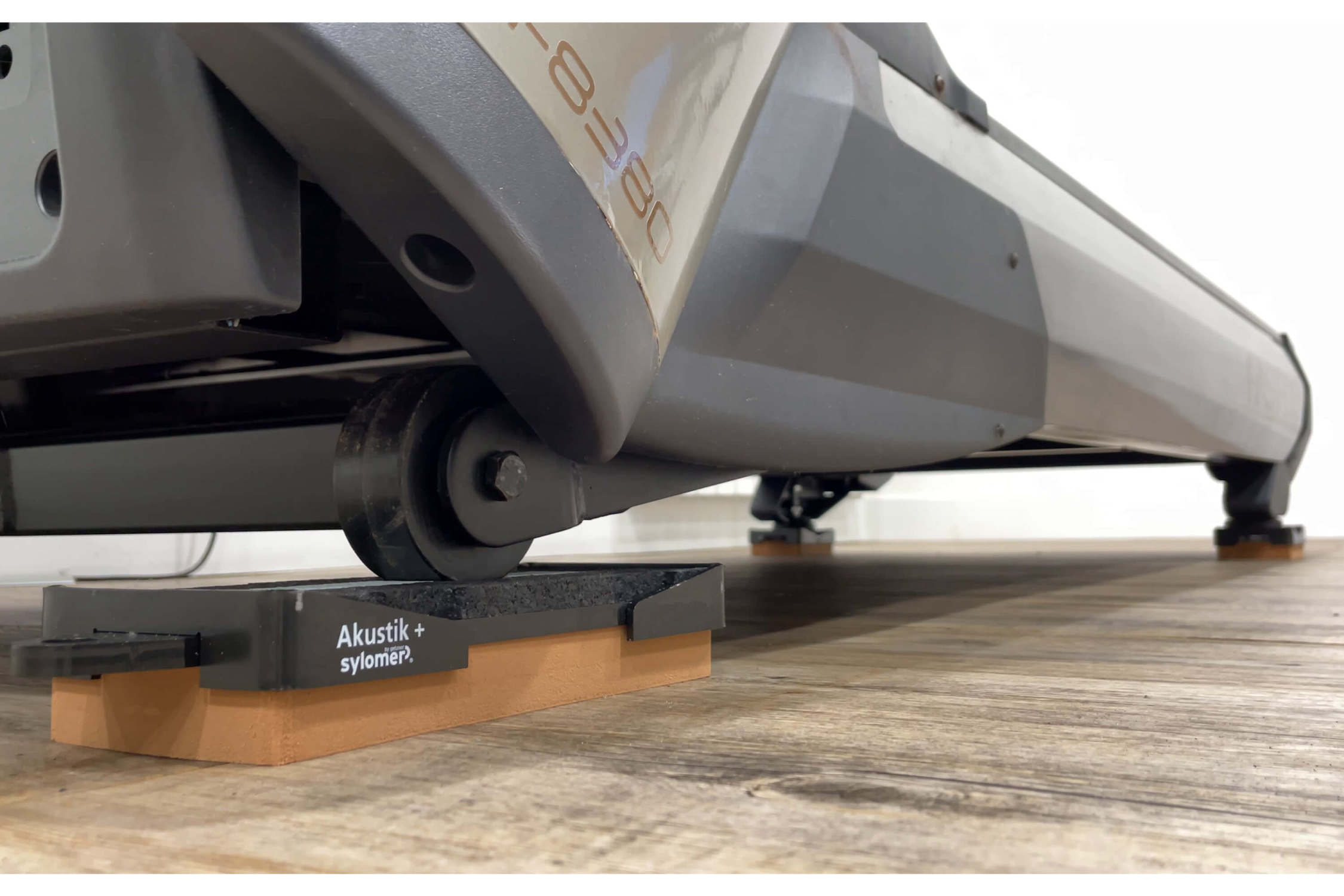
- Incline Adjustments (Wheeled Machines): For machines with a wheeled incline, place the treadmill without the incline activated carefully on the pads. Offset the front wheels slightly forward of the pad center point. Verify that when the treadmill reaches maximum incline, the front wheel shifts to a slight backward offset from the center point.
Time signal
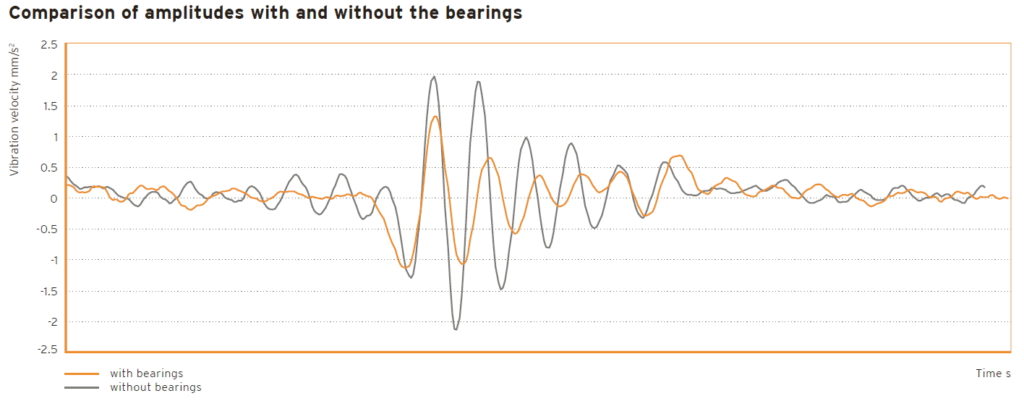
Acoustic effectiveness based on third octave spectrum
Summary
Through the use of high-damping elastic treadmill supports, the acting vibrations can be reduced by up to 33%. The vibration-isolation effect of the elastic PU material used reduces noise levels by up to 8dB (for running speeds of 8km/h) and 11dB (for running speeds of 12km/h) – effectively reducing them by half.
Technical drawings T4
Technical drawings T4 Lower Load
Specifications:
| Type |
Position |
Max load (kg) |
Code |
| GYM T4 |
Rear |
140 |
157152 |
| GYM T4 |
Front |
230 |
157153 |
| GYM T4 Low Load |
Rear |
80 |
157187 |
| GYM T4 Low Load |
Front |
100 |
157186 |