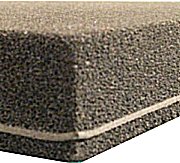
Description
Vibration Isolation Pads
Vibration Isolation Pads are high-performance synthetic polymer blocks designed to absorb shock and damp vibrations under variable weight loads. They serve as a premium acoustic-grade alternative to standard Sorbothane.
- Synthetic Polymer: A highly elastic, durable material engineered to withstand heavy, repetitive compression without breaking down.
- UDL (Uniformly Distributed Load): A load spread evenly across the entire surface area. These pads require a UDL to work effectively.
Key Applications
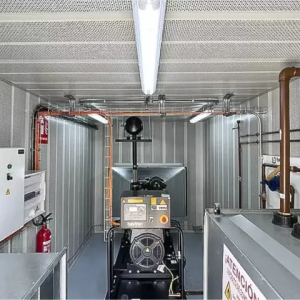
- Light Machinery: Isolating small mechanical equipment, pumps, and motors.
- Drum Riser Builds: Decoupling drum platforms from the subfloor to stop impact noise.
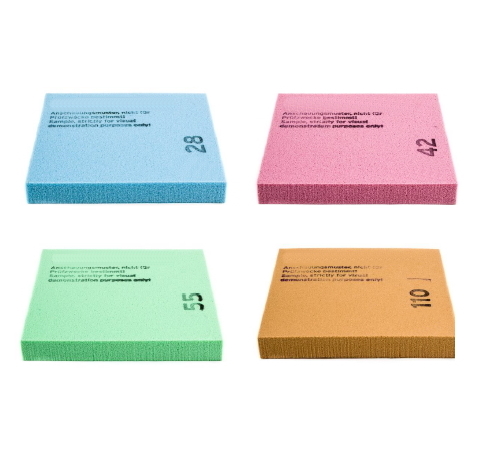
- Custom Tuning: Pads can be cut down to handle specific weight requirements. For example, cutting a Type 42 pad exactly in half allows each section to support 20kg.They should not be point loaded. A UDL on them is required so in some cases a piece of timber or metal plate should be used to spread the point load over the whole surface of the pad.
Technical Performance Data
Every pad is supplied in a standard 100mm x 100mm x 25mm size.
| Type |
Max. Load per 100mm pad |
Capacity |
Natural Freq. |
Deflection |
| 28 |
25kg |
92% |
14.3Hz |
1.4mm |
| 42 |
40kg |
99% |
12.2Hz |
1.8mm |
| 55 |
50kg |
95% |
12.5Hz |
1.7mm |
| 110 |
100kg |
98% |
11.9Hz |
2mm |
Key Product Advantages
- Load Peak Protection: Handles static loads from 0.011 N/mm² to 1.2 N/mm², withstanding temporary spikes up to 6.0 N/mm².
- High Fatigue Strength: Long service life with proven long-term elastic performance under constant stress.
- Low Amplitude Dependence: Delivers consistent, reliable vibration control regardless of how small or large the movement is.
Installation Critical Requirements
- Avoid Point Loading: Heavy, sharp, or uneven contact points will damage the polymer and reduce performance.
- Load Distribution: Always place a rigid timber board or metal plate over the top of the pads. This ensures the weight is distributed as a UDL across the full surface area.
We have a couple of blog help articles that provide some further information on vibration isolation. They can be read from the links below:
Vibration Natural Frequency Explained
Vibration Isolation Principles
How to soundproof Industrial Machines